
Be Greater. [006]: Own Your World
On Convenience vs. Ownership, and who really controls your life...
![[garrett fowler]'s avatar](https://substackcdn.com/image/fetch/$s_!WxZk!,w_108,h_108,c_fill,f_webp,q_auto:good,fl_progressive:steep/https%3A%2F%2Fsubstack-post-media.s3.amazonaws.com%2Fpublic%2Fimages%2F6ce97a08-7520-465c-b0bd-955824c2756d_640x640.png)
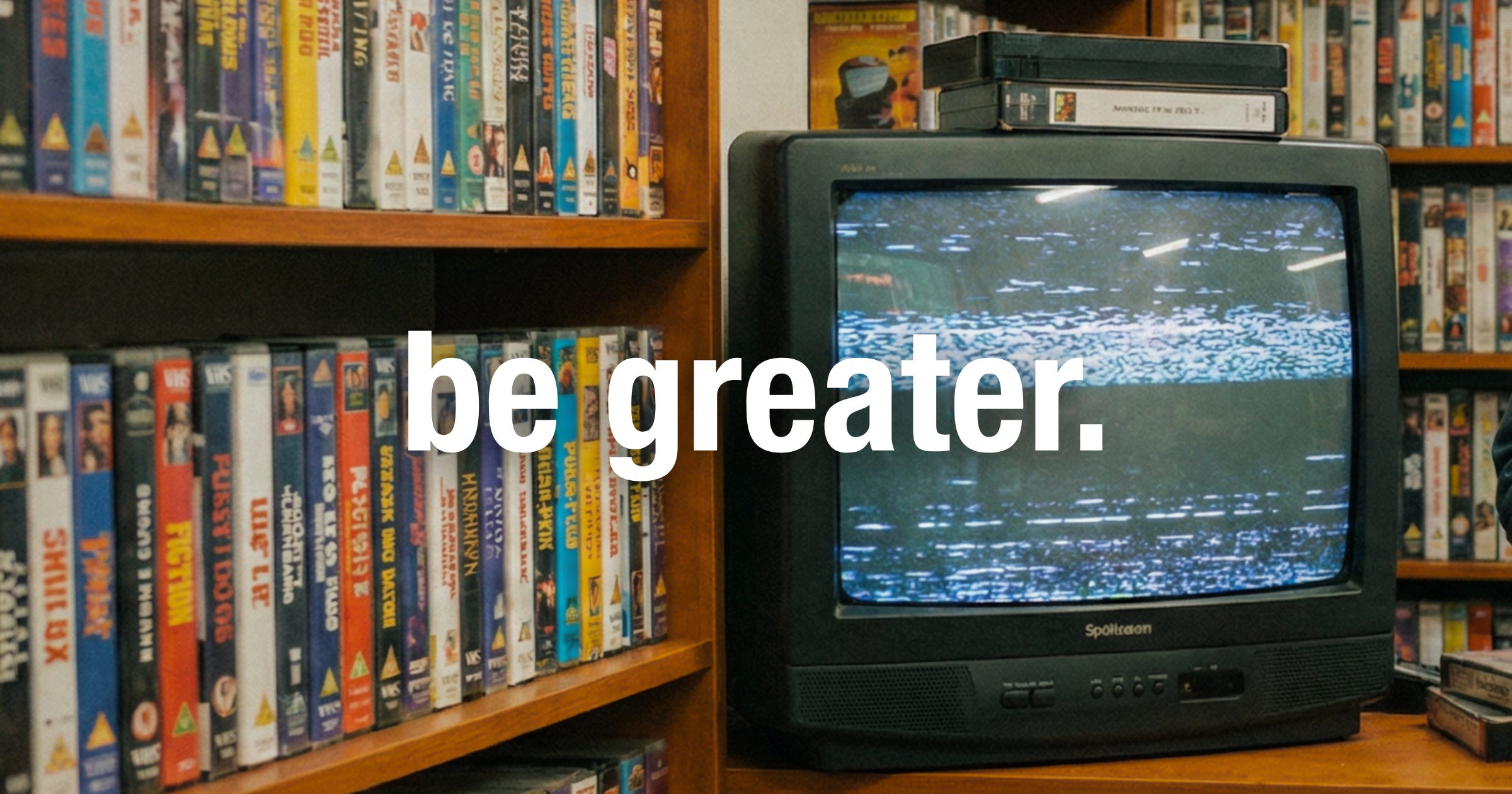
If you grew up in the iPod era, you remember what it felt like to own your music.
Not rent access to it, but really own it.
Albums bought one at a time. Songs synced manually. Libraries built slowly, intentionally. You knew every track because you chose every track. Your music was yours — sitting on a device in your pocket, available whether you had Wi-Fi or not, subject to nobody’s terms but your own.
Now contrast that with the present day. You open your streaming app, search for a song you’ve loved for years — one attached to a specific memory, a specific version of yourself — and it’s vanished. Removed. Unavailable. Just gone.
And you realize: it was never yours.
You were paying for access. Not ownership. The music lived on someone else’s servers, under someone else’s terms, subject to someone else’s decisions. Your library wasn’t a library, it was just a rental. And like any rental, the landlord can change the terms whenever they want.
That moment — that small, quiet shock of something disappearing from “your” collection — is worth sitting with. Because it’s not just about the music.
The Trade We Made
At some point in the last twenty years we made a trade so gradually that most of us didn’t notice we were making it.
We gave up ownership in exchange for convenience.
It started reasonably. Streaming was genuinely better than what came before. Netflix was cheaper and easier than cable. Spotify put millions of songs in your pocket for less than the price of one album a month. Each step made sense individually.
But the pattern underneath all of it was the same: we stopped owning things and started renting access to them.
Music. Movies. Software. Platforms. Audiences. Even our attention. One by one, the things we used to hold in our hands became things we pay monthly fees to borrow.
And access is a fundamentally different relationship than ownership.
When you own something, it’s yours. It stays. It doesn’t change without your consent. You can hold it, share it, keep it, give it away.
When you have access, you have it until the terms change. Until the price goes up. Until the platform pivots. Until the license expires. Until the landlord decides.
Netflix killed Blockbuster by being cheaper, easier, and better. Then once the competition was gone, the price went up, the content got thinner, and the ads came back. Now we pay cable prices for something we don’t own, can’t resell, and will lose the moment we stop paying. Spotify raised its prices too, along with almost every streaming platform that exists. And they will keep raising them, because once you’re hooked and the alternative is gone, the leverage shifts entirely to them. Your listening history is in there. “Your” playlists. “Your” library. Your algorithmic identity. Leaving means starting over. So you stay. And the price keeps going up.
This is what the ownership-to-access trade actually costs. Not just money. Leverage. The moment you stop owning things you lose the ability to walk away.
From Exploration to Platform
The early internet felt like ownership.
Your Myspace page. Your Tumblr. Your weird little blog. Your forum account. Your LimeWire downloads. Your hand-built playlists burned onto CDs nobody asked for but everyone accepted. Messy, imperfect, personal. Your own corner of something that felt genuinely open.
Then the internet became platforms.
Facebook. Instagram. TikTok. YouTube. They made it effortless to exist online — no coding required, ready-made audiences, built-in community. And in exchange, you built your presence on someone else’s land. You got the convenience of a ready-made stage and they got your content, your data, your attention, and eventually a significant piece of your identity.
The platforms start out promising. There’s community, connection, real growth. But eventually they have to grow faster and make increasingly more money and appeal to shareholders and advertisers. So the algorithm changes. The reach shrinks unless you pay. The culture of the platform shifts toward whatever drives engagement. And the version of yourself you built there — your audience, your voice, your presence — belongs to their terms of service more than it belongs to you.
One app update at a time, the platform loses its soul.
That’s part of why newsletters matter. An email list is one of the last pieces of internet real estate that actually belongs to you. Not rented reach. Not algorithmic distribution. Direct connection — yours to keep regardless of what any platform decides to do next.
The Deeper Trade
Here’s where it gets more uncomfortable.
The same trade happened with something far more valuable than our music collections.
We gave up ownership of our attention. Our taste. Our opinions. Our sense of self.
Think about how you discover music now. You don’t dig through a record store or a friend’s collection or a blog you trusted. An algorithm surfaces something and you either like it or you don’t. Your taste gets mapped, predicted, optimized. The algorithm learns what keeps you engaged and serves you more of it. Over time you stop discovering things and start being served things. The difference feels invisible but it’s enormous.
The same thing happened with news, with politics, with culture. You didn’t choose your information diet consciously — it was curated for you based on what kept you on the platform longest. Outrage kept you on longer than nuance. Confirmation kept you on longer than challenge. So the algorithm fed you outrage and confirmation and called it personalization.
And slowly, without realizing it, you rented out your mind.
Your opinions started to feel like your own but they were assembled by someone else’s system, optimized for engagement rather than truth. Your taste felt personal but it was a profile built from your behavioral data. Your sense of what matters, what’s funny, what’s scary, what’s real — shaped by feeds you never fully controlled and platforms with incentives that had nothing to do with your actual wellbeing.
We became subscribers to algorithmic versions of ourselves — and mistook personalization for personality.
What Owning Actually Looks Like
I want to be specific here because this isn’t just about buying CDs or vinyl records — though you should do that too.
Owning your world means building a relationship with things that actually belong to you. Music you purchased and can play without a subscription. Books on your shelf that nobody can delete. Videogames you can play without a subscription fee or internet connection. A newsletter where your audience is yours regardless of what any platform decides tomorrow. Opinions you formed by reading widely, sitting with complexity, and thinking things through — not ones that were served to you because they matched your engagement profile.
It means curating your own taste instead of outsourcing it. Knowing why you like what you like. Having a point of view that exists independent of what’s trending this week.
It means owning your attention — deciding deliberately where it goes instead of letting it be extracted. Reading the whole essay instead of the summary. Finishing the album instead of shuffling to the next thing. Sitting with a thought long enough for it to actually become yours.
This is the real ownership crisis. Not that we stopped buying CDs. It’s that we stopped forming ourselves independently. The higher standard isn’t nostalgia, it’s intentionality. It’s asking honestly: is this actually mine? Did I choose this or was I served this? Do I believe this because I thought it through or because my feed confirmed it a hundred times?
Own your opinions. Own your taste. Own your attention. Own your time.
Everything else follows from that.
The Pendulum Swings Back
Something is shifting though. You can feel it if you pay attention.
Vinyl record sales have been growing for nearly two decades. Physical book sales held strong through every prediction of their death. People are buying CDs again. Paying for newsletters instead of consuming free algorithmic feeds. Building audiences on platforms they control instead of renting reach from ones they don’t.
The instinct is right even when the form is different. Ownership matters. Control matters. Having something that’s actually yours — something that can’t be taken away by a terms of service update or a platform pivot or a price hike — matters more than it ever did.
We are at the beginning of a correction. The convenience-over-ownership trade is starting to show its true cost, and people are quietly, individually, starting to make different choices. Not all at once. Not with a movement or a hashtag. Just person by person deciding that renting everything isn’t actually freedom.
It just feels like freedom until the landlord raises the rent.
Own Something Today
Buy the album. Buy the book. Build the newsletter. Form the opinion. Choose the thought deliberately instead of accepting whatever gets served to you.
Not because streaming is evil or convenience is wrong. But because ownership is a fundamentally different relationship with the world than renting access. It’s permanence versus terms and conditions. It’s yours versus borrowed until further notice.
And the most important things in your life — your attention, your taste, your opinions, your sense of who you are — those especially should belong to you.
Not to the platform. Not to the algorithm. Not to the landlord.
Convenience feels like freedom until the terms change.
You are what you consume. Own what you are.
Log off, spread love, be greater.
— [gf]
This! Wholeheartedly agree with you 👍🏼 You've synthesised this concept into words so elegantly. I hope more and more of us start making little choices towards choosing agency again. Becoming increasingly disillusioned by the "attention economy" 🫠 and fear we have slid too far down the slippery slope collectively. But posts like these give me hope ☺️ the other day I saw someone use an iPod on the bus! That gave me hope too 🌟