


🌎📡 [ begin transmission ] :
Welcome :) You’re reading Be Greater. Thanks for tuning in.
Imagine waking up tomorrow and the internet is gone.
Not slow. Not spotty. Gone.
Your phone won’t connect. Your maps won’t load. The grocery store can’t process your card. That AI app you’ve been asking everything has gone silent. Whatever caused it — a massive cyberattack, a solar storm, a really bad Tuesday, or the robots finally deciding they’ve had enough of us — the world you’ve been counting on isn’t working the way it used to.
How capable would you be if the world went dark?
Now, I don’t expect the world to end anytime soon.
I do expect power outages, hurricanes, floods, winter storms, communications failures, and other disruptions that occasionally make modern life stop working the way it’s supposed to. Here in North Carolina, we’ve experienced enough of those that this isn’t just hypothetical.
*And I’m not the only one thinking about this. Around the world, governments from the UK to Japan have been updating their guidelines, urging households to keep several days of emergency supplies on hand. The exact recommendations vary, but the message is the same: be able to cope on your own for the first few days of a disruption.
Most of what follows is pretty ordinary preparedness, mixed with a few more interesting ways to become a little more independent in the Offline World.
Because we’ve built an extraordinarily capable world on top of foundations most of us rarely think about: electricity, cell towers, cloud storage, GPS, payment networks, streaming services, search engines, and servers scattered across the planet.
All of that is incredible.
But somewhere along the way, access started feeling a lot like possession, and convenience started feeling a lot like capability.
They aren’t the same thing.
Access can disappear. A service can shut down. Servers can go offline. The device in your hand may still work perfectly while half of what you normally use it for suddenly doesn’t.
So lately I’ve been putting together a small backup version of my modern life.
Nothing extreme. Just enough knowledge, power, communication, tools, maps, and entertainment to remain useful if the Offline World ever becomes the only world available.

Prepare for the boring emergencies first
Before we get to cool things like offline Wikipedia, there is an important rule:
Prepare for the ordinary emergencies before the extraordinary ones.
A multi-day power outage is more worth preparing for than an asteroid strike. Hurricanes, winter storms, floods, wildfires, water outages, and communications failures are much more realistic scenarios, and a little preparation can make a bad week dramatically less bad.
Safe water comes first.
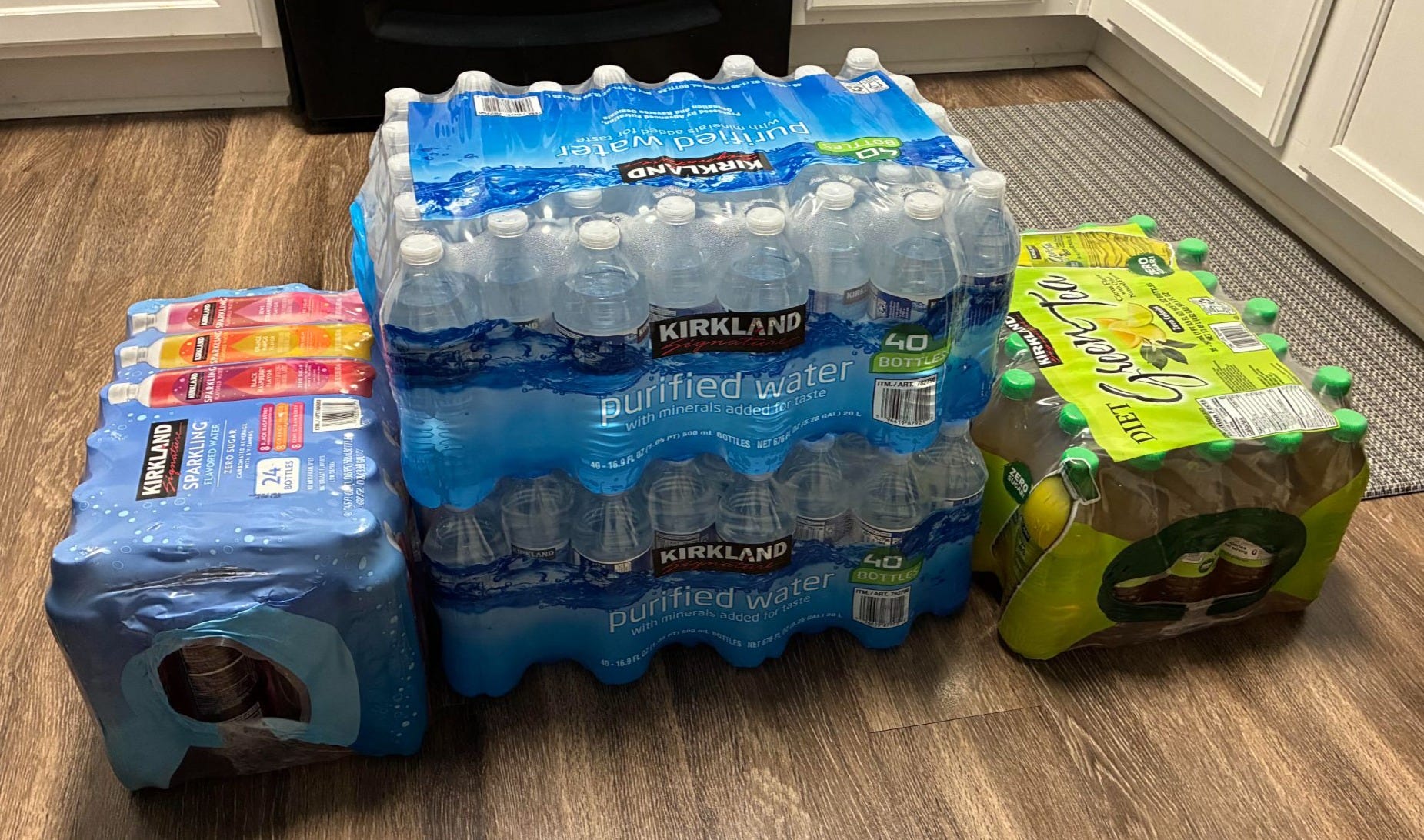
The American Red Cross recommends one gallon per person per day, with a three-day supply for evacuation and, when possible, two weeks at home. Its basic emergency list also includes nonperishable food, medications, first aid, flashlights, batteries, a battery-powered or hand-crank radio, sanitation supplies, important documents, cash, and a multipurpose tool.
Then think about the boring things people forget until they’re suddenly crucial: a manual can opener, blankets and warm clothes, hygiene supplies, and pet supplies if you have them.
Prioritize the things that keep you alive before the interesting gear.
An offline AI model isn’t as impressive if you forgot drinking water.
But once you’ve secured the essentials, modern technology gives us some genuinely fascinating ways to become more capable without a connection.
Save a piece of the internet
One of the stranger things about modern life is how much knowledge we have access to without actually possessing any of it.
The largest library humanity has ever assembled exists on servers. It might as well be on another planet when the connection disappears.
How much of your life depends on access to somebody else’s server?
That question led me to discover Kiwix.
Kiwix is an app that lets you download offline archives of Wikipedia, Project Gutenberg books, TED Talks, and other huge collections of information and keep them directly on your device.
You can carry an enormous library of human knowledge into the woods, onto an airplane, across another country, or onto a cruise ship in the middle of the ocean.
For most of human history, the greatest libraries in the world existed in large buildings.
Now you can carry one in your pocket.
Whatever archives you download are snapshots of the web at that moment, rather than a live version of the internet, so they need to be updated occasionally. But that’s a pretty small trade-off for having millions of pages of information available without a signal.
Then, for the next offline app, there’s Locally AI. Once a compatible model is downloaded to your device, the model can run locally without an internet connection or cloud processing.
I wouldn’t rely on an AI model as the authority for emergency medical decisions. These systems can still be wrong. But as an offline tool for general information, brainstorming, explaining concepts, strategizing, or working through information?
It can be remarkable. Even if you’re off the grid, you still have your own mini JARVIS.

Organic Maps is an app that takes the same principle and applies it to navigation. You can download maps for your region and use them for offline driving, hiking, cycling, and other navigation.
You can keep offline areas downloaded through your normal maps app as a backup too.
Download them before you need them. Then test them.
Seek by iNaturalist can identify plants and animals in real time using a model that works on the device without requiring an internet connection.
That’s genuinely useful outdoors.
Just don’t let an app be the sole reason you decide a mushroom you found in the woods belongs in tonight’s dinner.
A survival reference like the SAS Survival Guide can keep practical information locally available. The American Red Cross First Aid app puts step-by-step first-aid guidance on your phone. And an app like Ward can be useful for seeing nearby emergency shelters and bunkers, knowing about hazards, and downloading emergency resources ahead of time. Just verify anything you’d actually depend on against official local information.
Beyond apps, keep some boring information downloaded locally too:
Important documents. Insurance information. Emergency contacts. Medical information. Phone numbers you normally never memorize. Regional evacuation maps. Useful PDFs. Repair manuals. First-aid references.
Your phone can hold an extraordinary amount of information.
You don’t need to download all of civilization.
But it’s pretty nice to save some useful parts of it.
Talk to people nearby
For talking to the people around you, the best backups are simple: important numbers written on paper, a place your household would meet, and a pair of walkie-talkies for your block or campsite.
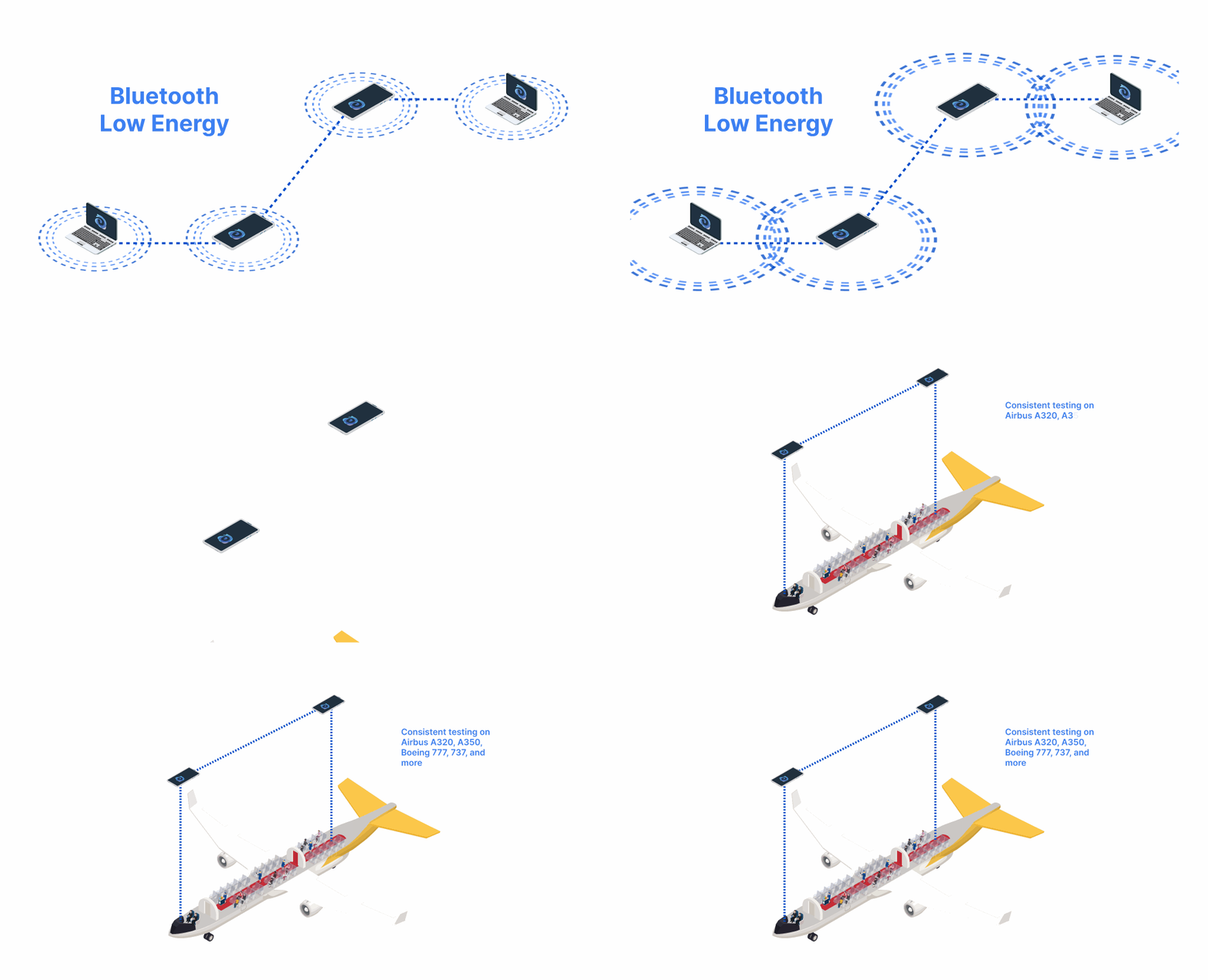
There’s also a newer option I’ve been experimenting with: bitchat, a very new messaging app (created by the co-founder of Twitter) that connects nearby phones over Bluetooth, with no cell service, Wi-Fi, account, or central server. Phones can relay messages through other nearby devices, forming a small local mesh when enough people are around.
Users have reported messaging each other across an airplane with no service. It also has potential practical uses; When India restricted mobile internet around protest sites in Delhi in July 2026, downloads there surged as protesters looked for ways to communicate off the normal networks.
It isn’t something to bet your life on. Bluetooth range is limited, a useful mesh needs other users nearby, and a new app can change or disappear. But if one system fails, having another gives you options.
The physical world still matters
A downloaded copy of Wikipedia is incredible.
It’s significantly less useful when the battery is dead.
So the first piece of physical gear is power.
A charged power bank keeps your phone alive for days. A foldable solar panel keeps it alive for as long as the sun comes up. That combination turns your offline library into a permanent one.
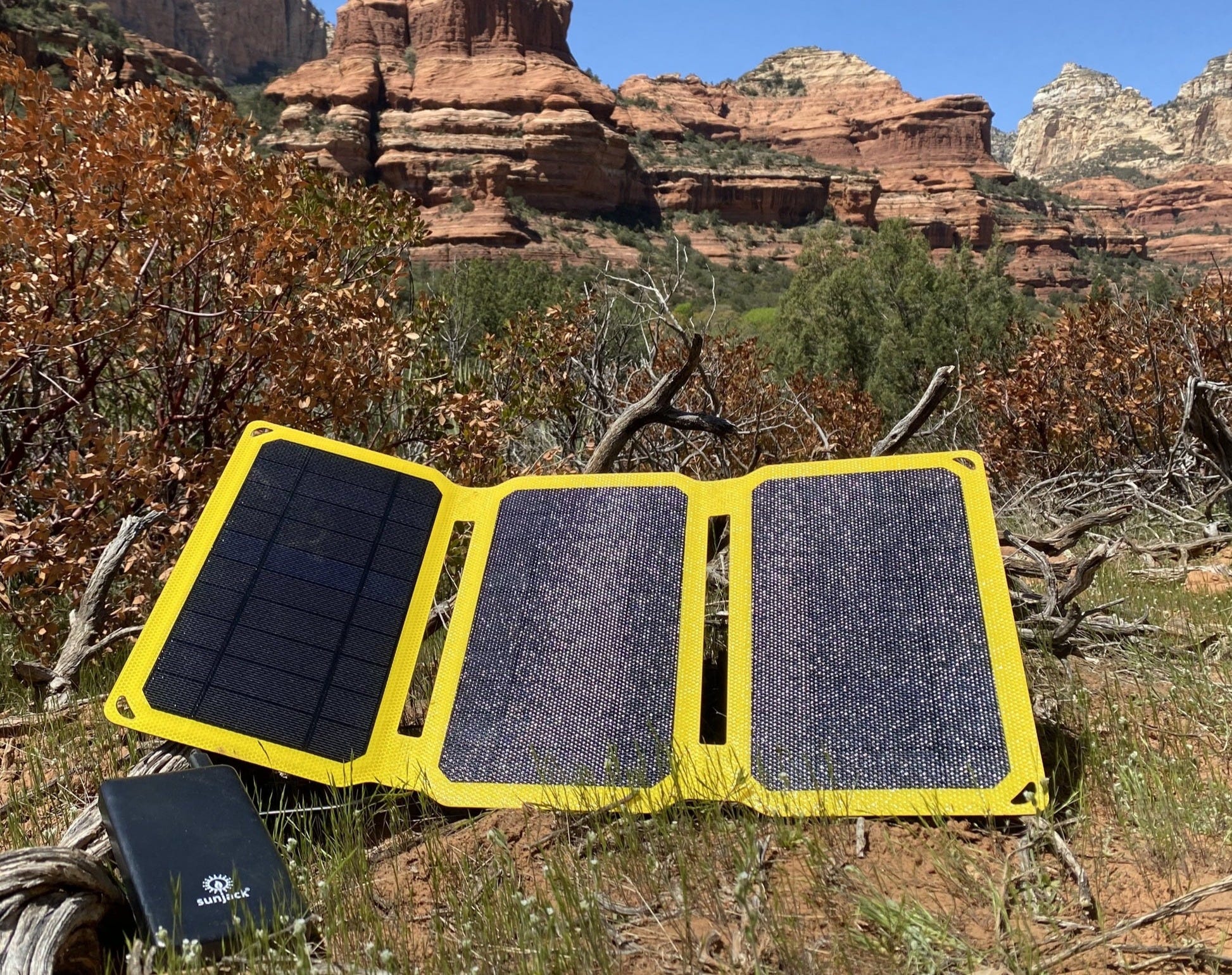
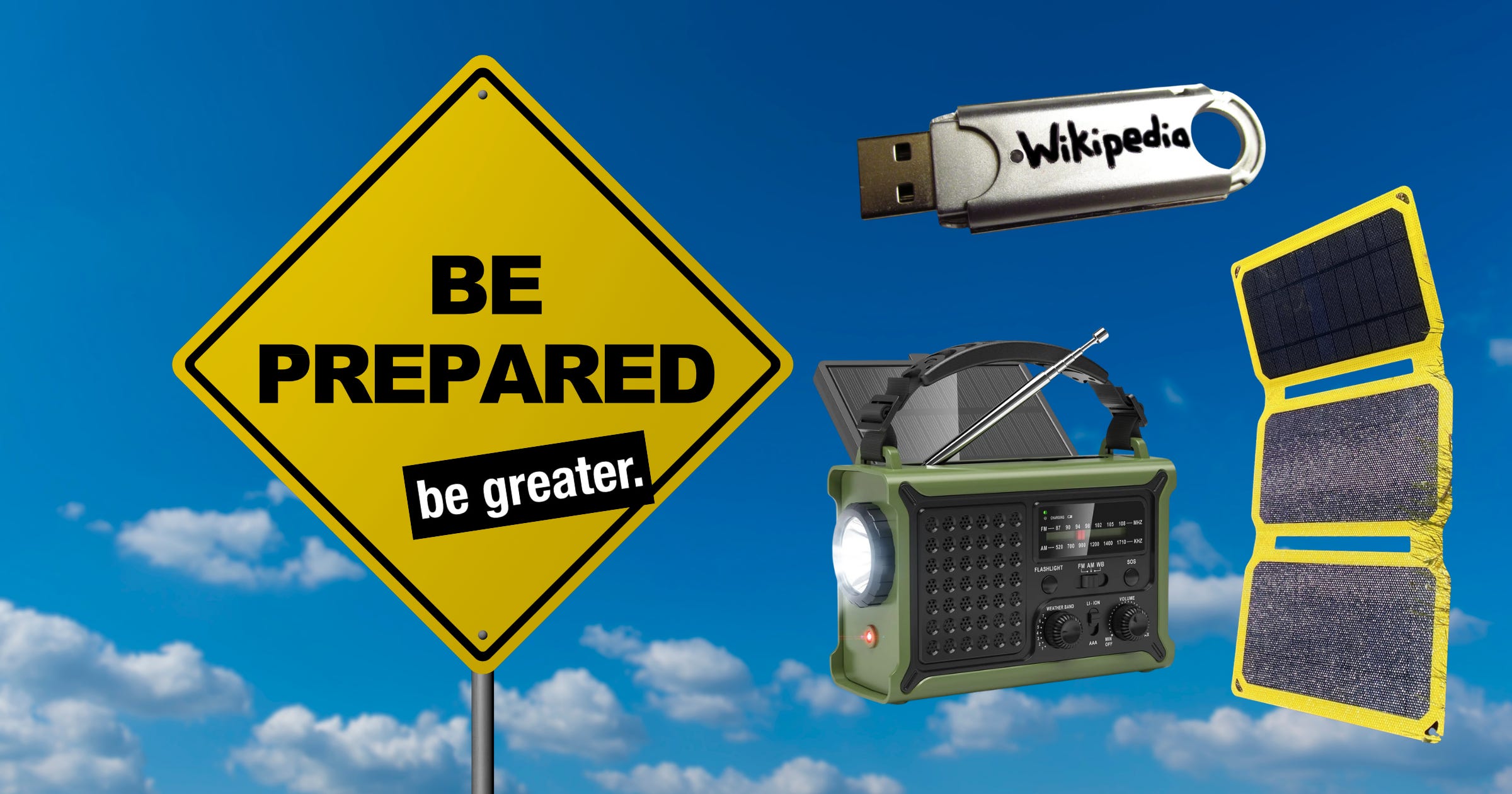
Your maps, books, Kiwix archives, and downloaded movies keep working off the grid, and they keep working as long as there’s enough daylight. A panel in the 20-30 watt range can typically recharge a phone in a few hours of good sun, which is enough to keep your phone, radio, and lights running indefinitely. Charge the bank ahead of time, and test the panel outside before you trust it.
Next is one of my favorite pieces of cool underrated technology: the emergency radio.
I like one with NOAA Weather Radio reception, a hand crank, a solar panel, a flashlight, external AA battery backup power option, and USB ports for emergency device charging.
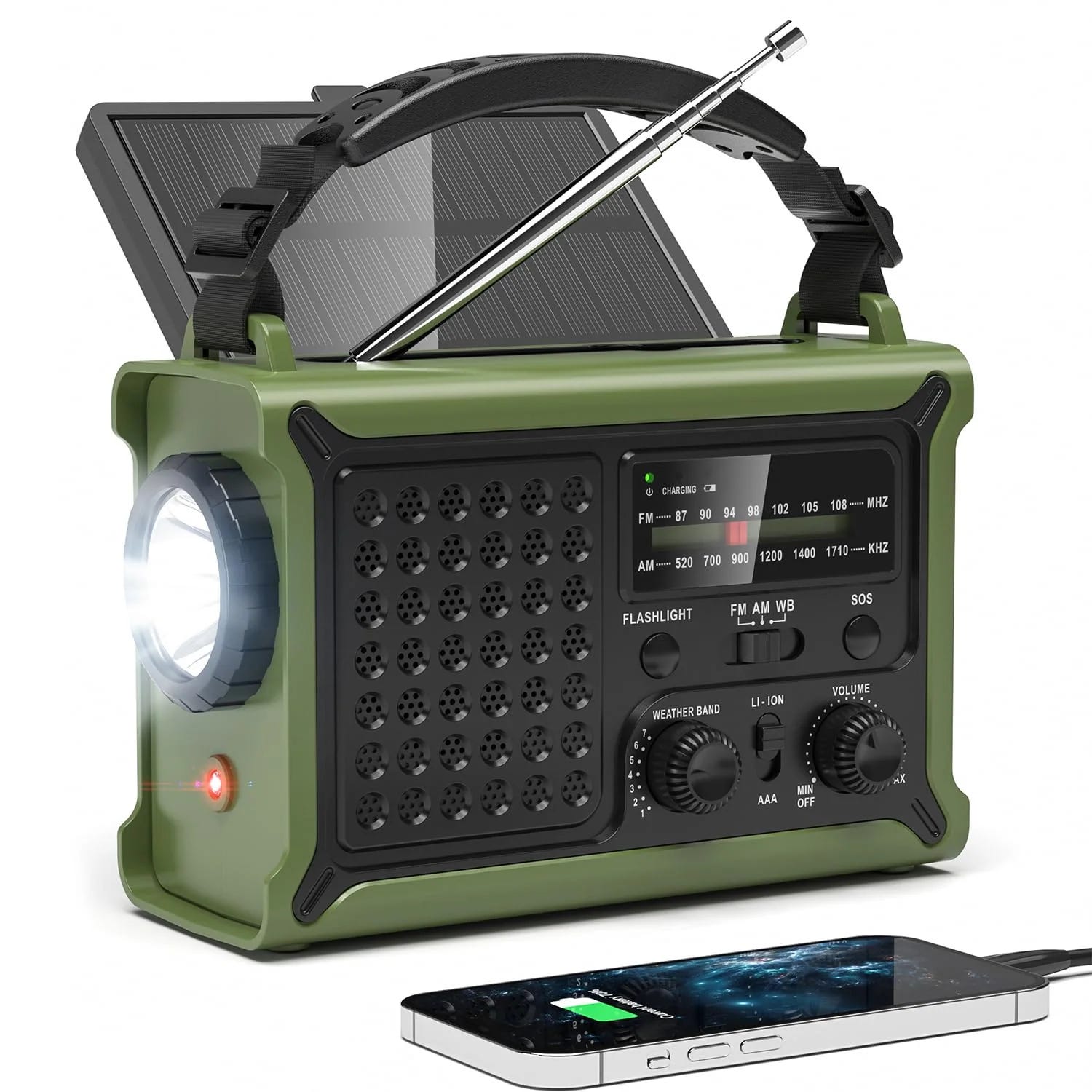
NOAA Weather Radio broadcasts official National Weather Service warnings, watches, and forecasts around the clock on dedicated frequencies. In a world of satellites, AI, and cloud computing, sometimes what you really want is a little box with an antenna that tells you a storm is coming.
Get one. Then turn it on and figure out how to use it before you need it.
Then there are printed maps. GPS and offline maps are great until your phone dies, breaks, overheats, or gets lost. Then you want paper. Keep a physical map of your area at home and keep a regional or state road map in the car.

And then the basic stuff: a first-aid kit you’ve actually opened, flashlights, batteries, a multi-tool, a whistle, a compass, blankets or warm layers, and sanitation supplies. If you want to be extra prepared (like if you camp or live somewhere remote), add a ferro rod for starting fires, an axe, a shovel, or more specialized gear.
Most people should buy the water and the flashlight first.
Preparedness should match your actual life.
Try going offline before the world makes you
Here’s a simple experiment worth doing.
Spend an afternoon pretending the internet doesn’t exist. Put your phone in airplane mode and try to actually use it.
Does your map work? Can you open the books you downloaded? Does your music live on the device or disappear the second Spotify can’t connect? Does Kiwix open? Does the emergency radio have power? Do you know where the first-aid kit is?
It’s a useful thing to discover on a boring Sunday rather than during an actual emergency.
You may find that your sophisticated twenty-first-century backup plan currently consists of 19% battery and half a bag of chips.
Better to find out now.
Don’t forget to enjoy being alive
Here’s what most survival guides skip entirely.
Assume you’ve covered the essentials: water, food, radio, charged phone, offline Wikipedia, working maps. Now what? There’s no Netflix. No Spotify. No YouTube. No social media. What are you going to do all day?
Obviously, if there’s a problem to solve, we’ll spend much of our time solving it. If there’s work to be done, we will focus on that first. But some situations simply involve waiting it out: a long outage, a storm that keeps you home, a quarantine. Personally, I don’t intend to spend a grid-down situation staring at a wall.
And if you’re caring for children, older relatives, or anyone already under stress, having something familiar to read, watch, play, or listen to can make a difficult situation a little easier.
Movies: Download purchased films locally through iTunes or Google Play before you need them. A device with a hundred downloaded films and a charged battery is excellent company. DVDs and a player that doesn’t require internet are even more reliable.
Video games: There are several compact portable game devices that don’t require internet. A Nintendo DS with an R4 card can hold hundreds of games on a single cartridge. An old Game Boy can run forever on rechargeable AA batteries. Older consoles with physical games don’t need servers or a license check, they just run. Test your systems offline before you assume they work.
Music: Songs downloaded on your devices, CD / record collections, maybe a battery-powered CD player. Something that plays without requiring a signal.
Analog: Cards, board games, books. The things people entertained themselves with for most of human history, and they’ll keep working regardless of what the servers are doing.
Sometimes the dedicated device that does one thing exceptionally well is more reliable than the connected device trying to do everything. Books always work. Records always play. Physical games don’t require authentication.
Preserving some of this isn’t nostalgia. It’s redundancy.
And redundancy is a form of wisdom, especially when discussing survival and preservation.
Independence is having options
There’s a reason I like all of this beyond emergencies: the more parts of my life I can keep running locally, the fewer things I have to depend on.
Redundancy gives you options, and options give you freedom.
If I own my music, I can cancel the streaming service.
If my maps work offline, losing reception doesn’t make me helpless.
If my books and reference material are stored locally, a server outage doesn’t erase my library.
If I have more than one way to communicate, one network failure doesn’t silence me.
If I own a few tools and know how to use them, every small problem doesn’t need somebody else to solve it.
None of this means rejecting companies, governments, or the systems that make life easier. We all depend on other people. That’s how civilization works. The goal is to avoid letting any one system become a single point of failure.
That’s where the freedom comes from. If a service gets worse, gets too expensive, changes its rules, or starts behaving in a way you no longer want to support, it’s much easier to walk away when you’ve kept an alternative. You can vote with your dollar and your values more easily when leaving doesn’t mean losing half your life.
That’s the kind of independence I’m interested in.
You don’t have to withdraw from the modern world, but you can become more prepared and less fragile inside it.
Be someone people can count on
If you end up better prepared than most people around you, that’s not a reason to feel superior. It’s an opportunity to be useful.
Maybe a friend or neighbor needs their phone charged. Maybe someone needs to hear what the radio is saying, or which way they should be going with your map. Maybe you’re a calm person in a stressful situation because you’re not scrambling for information.
You don’t have to become a prepper or an expert at anything. Just learn some basic first aid. Know how to shut off your utilities. Have a family communication plan written somewhere other than your phone. Know two or three neighbors by name.
*One caution: be wise. Helping people doesn’t mean being reckless, advertising everything you have, or putting yourself in danger. Share what you can, use good judgment, and know when a situation requires trained help. “Put on your own mask before assisting others” is an important rule for life.
Being prepared isn’t just about surviving alone. It’s also about having something to offer when things get difficult.
That’s what it means to be greater.
The point
I don’t know what the future holds.
Hopefully the power stays on, the servers keep humming, the satellites keep working, the grocery store accepts our cards, and our emergency radios can collect dust in a closet for the next twenty plus years.
That would be a great outcome.
But if something unexpected happens, I’d rather have water, a working radio, an offline library, a map, some stored power, and a few useful skills than to discover how dependent I’d become only after the systems stopped working.
And if nothing happens?
I’ve still got physical books. I own much of my music and movies. I can navigate without a signal. I have tools and games. I’ve learned a little more, and I’m a little more capable.
That doesn’t feel like wasted preparation.
The modern world lets us outsource an extraordinary amount of memory, knowledge, navigation, entertainment, and capability. A lot of that can be a gift, and I don’t want us to go backward.
So use GPS. Use streaming. Use the cloud. Take advantage of the extraordinary tools the modern world gives us, and use them with intention.
Just make sure your whole life isn’t resting on top of them. Keep something underneath: some knowledge, some physical tools, a backup plan, a few alternatives, and a few people you can rely on.
Then when something unexpected happens, you can spend a little less time panicking and a little more time thinking clearly, or helping someone else.
Preparing for the unexpected is a way of caring about the future, and the people you’ll share it with.
The future may be unpredictable.
That doesn’t mean we have to be unprepared.
📡 [ end transmission ]
The offline backup — quick reference
Essentials
Water · Nonperishable food · Medications · First-aid kit · Hygiene/sanitation · Warm layers/blankets · Cash · Important documents · Manual can opener
Information & Navigation
NOAA emergency radio · Kiwix · Offline Apple Maps · Organic Maps · Printed local/regional maps · Compass · Red Cross First Aid · SAS Survival Guide
Communication
Written emergency contacts · Household meeting plan · Walkie-talkies/two-way radios · bitchat as an additional nearby mesh option
Power
Charged power banks · Spare batteries · Charging cables · Portable solar panel
Tools
Flashlights · Multi-tool · Basic household tools · Whistle · Optional water filtration · Outdoor/wilderness equipment appropriate to where you live
Offline Life
Downloaded books · PDFs/manuals · Locally AI · Seek · Ward · Downloaded music and movies · DVDs/CDs/records · Offline games · Books · Cards · Board games · Paper and pens
Log off. Spread love. Be greater.
– [gf]